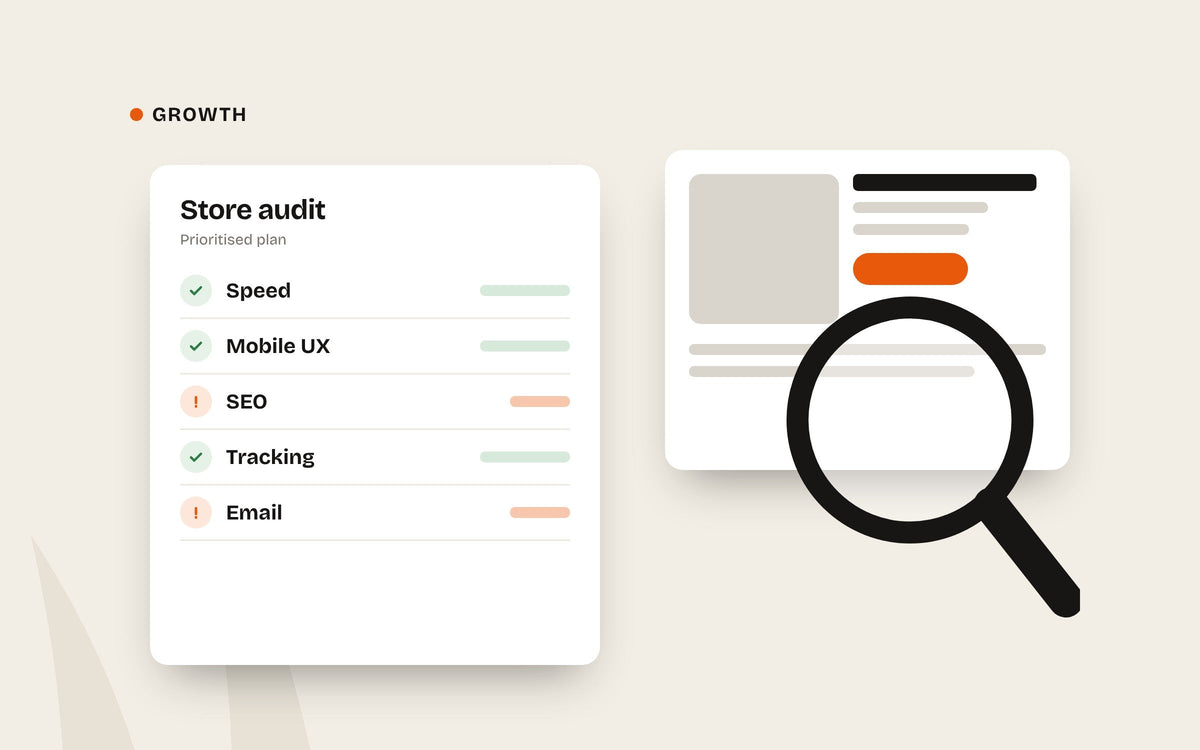
Plenty of store audits are really just a tool report with a logo on the front: hundreds of warnings, no sense of what matters, and no plan. A useful audit looks at the whole store the way a customer — and a search engine — experiences it, then tells you what to do first.
1. Speed and performance
Check how pages load on a real mid-range phone, not just a desktop score. Look for the usual culprits: oversized images, apps that load scripts on every page, and theme code that hasn't been touched since launch. Removing an unused app is often the single fastest win.
2. UX and conversion
Walk the main journeys — home to product, search to product, product to checkout — on mobile and desktop. Where do people have to think? Is delivery cost clear before checkout? Are product pages answering the questions that stop people buying?
3. SEO and AI search
Technical health first: indexing, duplicate URLs between products and collections, broken links and sitemaps. Then content: do collection pages match what people search for, and is there structured data so search engines and AI assistants understand what you sell?
If you can't trust your tracking, every other decision is a guess.
4. Tracking and analytics
Check that GA4, Meta and Google tags are installed once (not twice), that purchases are being recorded, and that the numbers roughly match what Shopify reports. It's common to find decisions being made on data that's quietly wrong.
5. Email and retention
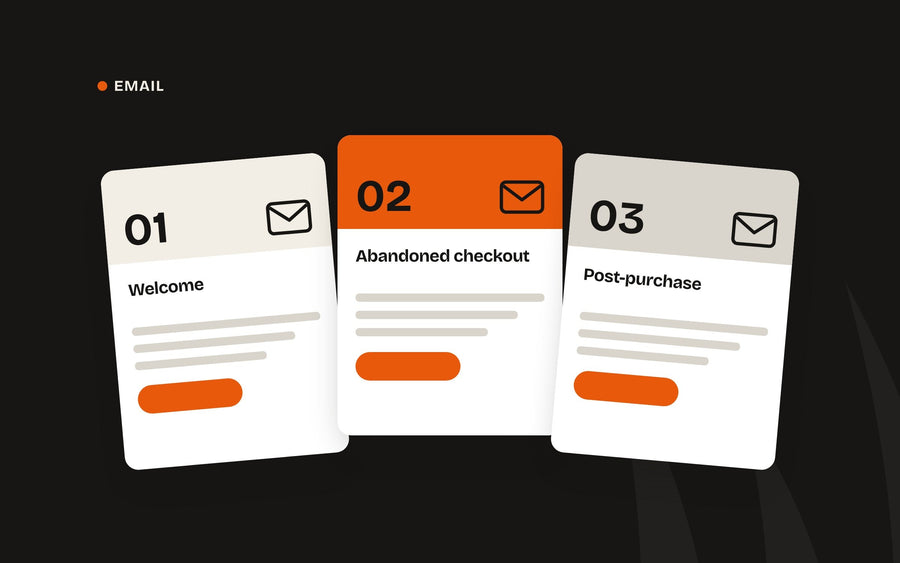
Is there a sign-up offer people actually want? Are the welcome, abandoned-checkout and post-purchase emails switched on — and reaching inboxes? For many stores this is the cheapest revenue they're not collecting.
6. Channels
Where could you be selling but aren't? Google Shopping, social shops, marketplaces, overseas customers and wholesale can all run from the same Shopify store once they're set up properly.
What you should get at the end
Not a list of everything that's wrong — a prioritised plan. Each recommendation should say why it matters, roughly what it's worth and how much effort it takes, so you can tackle the quick wins this week and plan the bigger pieces properly.
Our ecommerce audits cover all six areas on any platform, whether or not you build with us afterwards.